Monday, April 20, 2009
Cervical Polyp Removal Period

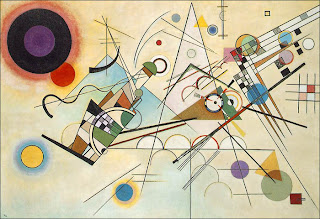
 When he turned thirty, Kandinsky left teaching and went to study painting in Munich, giving up a future which has become academic. In this city attended the classes of F. Stuck and they met Paul Klee, with whom he maintained a sincere and long friendship. His interest in color is present from the beginning of his career, and can be seen in his earlier paintings the influence of posti
 MPRINT, Fauvism and German Jugendstil. Between 1902 and 1907 Kandinsky made countless trips to France, the Netherlands, Tunisia, Italy and Russia, to settle finally in Murnau, where he painted a series of alpine landscapes between 1908 and 1910. As he recounts in his biography, then realized that the representation of the object in his paintings was 
secondary and even harmful and that beauty of their work lay in the rich color and formal simplification. This discovery led to a continuous experimentation culminating in late 1910 with the final conquest of abstraction. Kandinsky merged the color of the Fauves freedom with the manifestation of the artist's existential impulse proposed by the German Expressionists of the orbit of Dresden, in a synthesis tinged lyricism, spirituality and a deep fascination with the na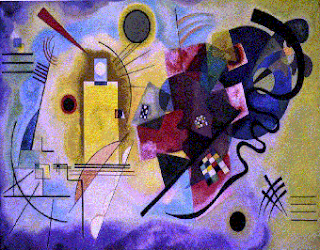 and
and
TURE forms. Between 1910 and 1914 Kandinsky painted many works which he grouped into three categories: prints, inspired by nature, improvisations, expression of inner emotions, and the compositions, they pooled the intuitive with the most demanding compositional rigor. These paintings are characterized by the articulation of bold black lines and bright colors in them a little is still perceived the presence of reality.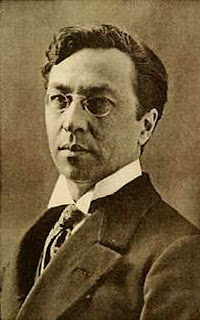 In 1911 he founded along with Franz Marc and August Macke Der Blaue Reiter group, organizing exhibitions in Berlin and Munich. Parallel to his creative work, reflected on the art
 and its close link with the inner self in many writings, especially the Spiritual in Art (1910) and Der Blaue Reiter Almanac, which, together to drawings and prints by members of the group, appeared other arts, as scores of Schoenberg (Kandinsky remained a constant and fruitful relationship with music throughout his life) and samples of folk art and children. the outbreak of World War I, Kandinsky returned to Moscow and there he undertook a number of organizational activities within the Department of Fine Arts of the People's Commissariat of Education. In 1917 he married Nina Andreievsky and four
years later moved with her to Germany to join the Bauhaus in the first stage of Weimar, where he would continue as a teacher until shortly before its dissolution.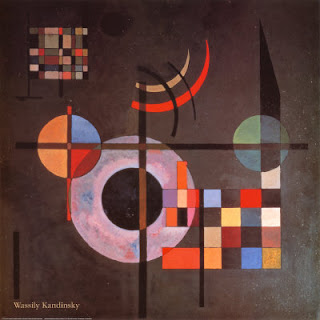 The environmental influence of the Bauhaus was felt, and his work underwent a transition to a more structured, both compositional and formal, which has been called the architectural period of his painting, which was followed by a transition in which experimented with
concentric circular strokes (Circles, 1926). He also wrote manifestos for the Bauhaus and published the book Point and Line to Plane. In 1933, the closing of the Bauhaus by the Nazis, the artist moved to France. In this last stage of his life he continued in his quest to find inventive ways, who depicted by color combination in a complex manner and drawing on geometric signs and Slavic motifs, as it did early in his career painting.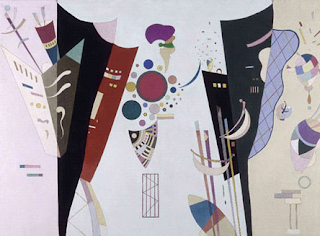

secondary and even harmful and that beauty of their work lay in the rich color and formal simplification. This discovery led to a continuous experimentation culminating in late 1910 with the final conquest of abstraction. Kandinsky merged the color of the Fauves freedom with the manifestation of the artist's existential impulse proposed by the German Expressionists of the orbit of Dresden, in a synthesis tinged lyricism, spirituality and a deep fascination with the na
 and
and TURE forms. Between 1910 and 1914 Kandinsky painted many works which he grouped into three categories: prints, inspired by nature, improvisations, expression of inner emotions, and the compositions, they pooled the intuitive with the most demanding compositional rigor. These paintings are characterized by the articulation of bold black lines and bright colors in them a little is still perceived the presence of reality.
 In 1911 he founded along with Franz Marc and August Macke Der Blaue Reiter group, organizing exhibitions in Berlin and Munich. Parallel to his creative work, reflected on the art
  and its close link with the inner self in many writings, especially the Spiritual in Art (1910) and Der Blaue Reiter Almanac, which, together to drawings and prints by members of the group, appeared other arts, as scores of Schoenberg (Kandinsky remained a constant and fruitful relationship with music throughout his life) and samples of folk art and children. the outbreak of World War I, Kandinsky returned to Moscow and there he undertook a number of organizational activities within the Department of Fine Arts of the People's Commissariat of Education. In 1917 he married Nina Andreievsky and four
 years later moved with her to Germany to join the Bauhaus in the first stage of Weimar, where he would continue as a teacher until shortly before its dissolution.
 The environmental influence of the Bauhaus was felt, and his work underwent a transition to a more structured, both compositional and formal, which has been called the architectural period of his painting, which was followed by a transition in which experimented with
 concentric circular strokes (Circles, 1926). He also wrote manifestos for the Bauhaus and published the book Point and Line to Plane. In 1933, the closing of the Bauhaus by the Nazis, the artist moved to France. In this last stage of his life he continued in his quest to find inventive ways, who depicted by color combination in a complex manner and drawing on geometric signs and Slavic motifs, as it did early in his career painting.


Monday, April 13, 2009
What Is The Wholesale Prive Of Chicken Wings
private collections inaccessible to citizens leave valuable works. Art greedy rob the world's most important works of mankind. Tamara de Lempicka 1898-1980
private collections inaccessible to citizens leave valuable works of art Avars rob the world's most important works of mankind.  Mateos-Vega Monica
  Greed is responsible for many of the most important artworks in the history of mankind is inaccessible to the eyes of the public, being in private collections.
 The most important and controversial is the Wildenstein collection, valued by various experts in at least 10 billion dollars!
There are paintings by Van Gogh, Renoir, Gauguin, Cézanne, Monet, Caravaggio, El Greco, Fragonard, Rembrandt and Rubens, and even, "he said during a trial on the family estate, a painting by Vermeer critics still unknown .
While almost no one has been able to accurately inventory the entire collection in 2005 came to light a small portion, to be auctioned furniture, tapestries and other artworks
 . The house Christie's, London, estimated then at more than 25 million dollars worth of the lot offered, which included everything from paintings of François Boucher and Franco-Flemish tapestries, even a collection of furniture from the famous French cabinetmaker André Charles Boulle (1642-1732).
 The pieces were spotless, despite having been acquired 100 years ago by the founder of the dynasty of Jewish origin, Nathan Wildenstein.
The works were part of the decor Wailly hotel on Calle de la Boetie Paris, which houses the Wildenstein Institute founded in 1970 by Daniel Wildenstein, the grandson of Nathan, whose library has just over 400 thousand books, most dedicated art.
The Wildenstein, who have helped shape other important private collections in the world, have been involved in proceedings relating to works of art stolen by the Nazis. In one of them had sue for defamation
 rejected by the courts against an art historian who accused them of collaborating with Hitler. In another mess
 judiciary, judges must determine whether a collection of medieval books, stolen by the Nazis in 1940, belonged to Alphonse Kann or Jewish family, no doubt, continues to capture the best works in international auctions. Art Predator
American billionaire Steve Cohen is also known as one of the largest predators of the art market. Is among the best customers of the auction house in London and New York, it does not hesitate to spend millions of dollars to keep your collection day, which integrates works as Bathers Paul Gauguin, Portrait of peasant, by Vincent van Gogh, and a Madonna by Edvard Much.
Its weakness is the works of contemporary art, for example, owns two splendid paintings by Willem de Kooning: Woman Police Gazette and III, for which he paid
 64.5 and 137.5 million dollars respectively.
 also has the most famous and controversial work of Damien Hirst, a shark preserved in formaldehyde inside a huge transparent box, piece entitled The Physical Impossibility of Death in the Mind of Someone Living, which disbursed $ 11.8 million, the highest figure paid for the work of a living artist.
According to some sources, Cohen thought to donate to the Museum of Modern Art in New York, but the animal's body began to decompose, so the artist and the buyer must agree on the conditions for replacement, the magazine reported in 2006 Art Newspaper.
These days, Sotheby's presents Women on the female figure collection by artists such as Picasso, Munch, Modigliani, Freud and Warhol. All pictures belong to Cohen, who has caused a stir with this show, it is the first time you share with the public a considerable amount of its treasures.
Another avid collector of art is Phillipe Niarchos, son of Greek shipping magnate Stavros Niarchos. Is fan Impressionist and modern art among his possessions include the Autorretr
 ato with Bandaged Ear, Portrait of Pere Tanguy and The House of Pere Pilon, Van Gogh, and what is arguably the most important Gauguin private hands: Riders on the beach and I self-portrait, Picasso, who bought in 1989 for nearly $ 48 million, a portrait of Jean Michel Basquiat for which he paid $ 3.3 million and Shot Red Marilyn, Andy Warhol, with whom he maintained a close friendship.
 Of Scotland is the Duke of Sutherland, who has an enviable private collection of works by old masters including Rembrandt self-portrait painted in 1657 and as the Bridgewater Madonna by Raphael, and the entire series of the Sacraments of Nicolas Poussin.
An attack of generosity made the British aristocrat's government decided to sell his country two Titians at a bargain price: 110 million euros. But the United Kingdom, who started last year a public campaign to collect funds, has accused him of wanting to profit and avoid paying taxes when sold.
 magnate and requires them to pay what he asks for paintings titled Diana and Actaeon and Diana and Callisto, annoyed by the delay commented on the open market would have gotten the money triple. for their greed, not only in matters of art, family Duke's has been criticized even by Karl Marx, who dedicated in 1853 an article in which he denounced the way in which this aristocratic family became rich, by expropriating land from Scottish and Gaelic peoples, which meant the expulsion of some 3 000 families between 1814 and 1820 to convert these lands into pasture for sheep of Sutherland.
 In Madrid, the Duke of Alba, in France, husband of Salma Hayek, François Pinault, and the legendary Charles Saatchi (who, with Cohen snatch Hirst's works) are some of the most important spell of greed Private collectors of art.

Tuesday, April 7, 2009
Kotex 11 Maternity Pads

 Art Deco was born into a wealthy family, being from a small girl and authoritarian character. In 1910pinta his first work, a portrait of his sister. 1911hace with her grandmother in a trip to Italiadonde discovered his passion for art. In 1916se married in St. Petersburg with the Polish lawyer Tadeusz Lempicki. While leading a luxurious life in St. Petersburg, October Revolution imprisoned Tadeusz but she took him out of prison and moved to Compenaghe. In 1923 he moved to Paris, where her daughter, Kizette. Tamara took classes in painting with Andre Lhote
 later exhibited in various galleries in Paris, art deco style, as in the gallery Colette Weill.
in 1925 had a place in the first Art Deco exhibition in Paris, where he made a 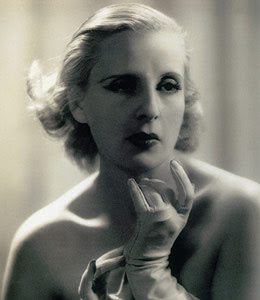 artist name. Kizette later travel to Italy to look again at Italian art. In 1927, on the balcony Kizette awarded the first prize at the Bordeaux International Exhibition
divorces in 1929 and meets Tadeusz Baron Raoul Kuffner a collector of his work. Next to him, he travels to the United States. There, despite his bisexual orientation, Tamara agrees to marry the baron. It is famous among the bourgeoisie New York and exhibited in several American and European galleries. In 1933, traveling temporarily to Chicago where he worked with Willem de Kooning and Georgia O'Keeffe in 1938 they moved to Beverly Hills.
Kizette In 1941 he went to live with his mother. In 1960, Tamara changes style, turning to abstraction in 1962, the baron dies.
March 18 1980Tamara de Lempicka died in Cuernavaca (Mexico). Kizette, indulging a dream of his mother, accompanied by the sculptor Victor Contreras (heir to much of the work of the painter), rose a helicopter and went to throw his ashes in the crater of Popocatepetl.
Polish painter born in Warsaw. Her husband's arrest by the Bolsheviks became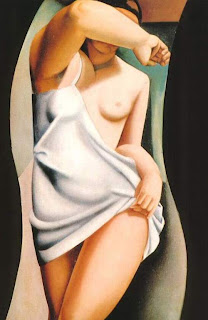
a kind of heroine. After rescuing her husband traveled to Paris where he eventually became a muse of painting Art Deco and dazzled the aristocracy with the deliberate sensuality of his art. Married second husband, a millionaire, made her Baroness and flashes in the great halls began to mix with the incipient rise of Nazism. It then traveled to America, where he decided to live as spectacularly as he had planned. He was friends with Greta Garbo, Orson Welles, Tyrone Power and Rita Hayworth, among others. On the death of her husband decided to leave this country, going to live in Cuernavaca (Mexico), where he continued painting and frequenting the high social circles until his death. Tamara de Lempicka died in 1980 and his ashes are scattered over the volcano Popocatepetl
Hard to tell someone about whom there are so few hard facts, beginning with the date and place of birth as it has not been clarified whether it was in Warsaw in 1898 or Moscow in 1900 ... not if it is a matter of lack of documentation or a "fad ideological" like Frida Kahlo, the fact is that it is not possible to determine con exactitud este dato.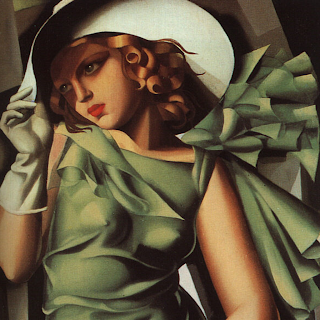 Lo pocos datos concretos sobre su vida, mas allá de su especial obra pictórica profusamente documentada, se limitan a una escueta biografía y a una relación de sus innumerables viajes y a reseñas de una vida social muy activa que yo voy a resumir aun mas limitándome a los sucesos resaltantes de su vida; con certeza, del libro escrito por su hija Kizette, "Pasión por el Diseño", puedan extraerse mas datos, seguramente fidedignos aunque tal vez matizados por la cambiante relación que tuvo con su madre, (en especial en los últimos años de vida de la artista) aunque de cualquier forma será un retrato mas justo y realista que el
que hizo de ella Franco Maria Ricci in his 1977 book, which I have not read but evidence found here and there seems to be a sensationalist and scandalous exhibition of the life of Lempicka ...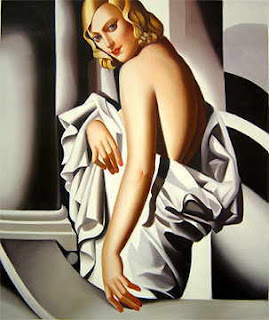 Tamara de Lempicka, was born into a wealthy family and well placed socially as a child he showed his strong character, independence and a well-defined criteria and their own special skills in painting, having managed to escape a boring education in boarding schools in Europe traveling with his maternal grandmother discovered that his "taste" for the painting is actually a passion that in the course of the 80 - 83 of his life with originality and skill exercise.
Denied to return home and after a brief spell of study in Lausanne is to live with his grandmother in Petrograd where at 18 she married the lawyer
Tadeusz Lempicki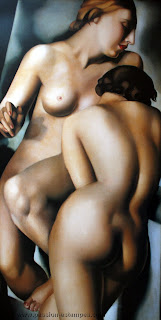 and this is a crucial point in his life because a few years then in the midst of the maelstrom of the Russian Revolution and her husband is arrested, after much effort succeeds Tamara release giving him a halo of heroin which she gladly wrap. Following the release travel to Copenhagen and soon after to Paris, where her daughter was born installed and Kizette, in this early period is when Tamara Paris began a formal education in painting, studying under the guidance of Maurice Denis and André Lothe.
Despite the vicissitudes of life Tamara maintains economic status, reinforced by the sale of his early paintings, it allows a very loose way of life (which would mark his life) and allows you to perform many European travels in the company of high society in contrast to its close association with the bohemian Paris, at that time of great characters who would make history in many areas such as Cocteau and Picasso. With his style
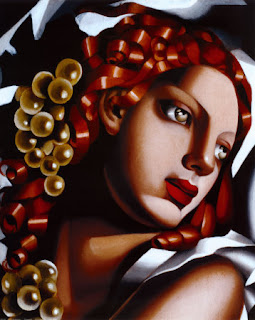 clearly defined and framed you in Art Deco, in the decade of 20, participated in exhibitions that open the doors of the world, so to speak, making spaces for dissemination itself and his work in magazines like Harper's Bazaar.
In this decade, major events happen in your life: you move a season in Italy where he also presented his works in exhibitions maintains relations with the playwright Gabrielle D'Notice that although it takes just three short years will leave deep emotional marks, even in these years achieved significant recognition by winning awards notorious in Bordeaux and in Poznan in 1928 as well as concrete Tadeus divorce.
In the following years consolidating its position as an artist to produce his most notable paintings, including self driving a green Bugatti will provide recognition (in addition of numerous commissions), as a portraitist. In 1933 she married Baron Raoul Kuffner, who is also its greatest collector and dealer.
eyeing the hard times that predicted the Nazi threat moves into the U nests in 1939 where in addition to hobnob with the elite of society and great film artists at his home in Beverly Hills, made successful exhibitions in New York and San Francisco, his daughter Kizette meets with them at this time and shortly after marries an American geologist.
The brightness of the career of Tamara de Lempicka fades gradually, try a revival in the early 60 without greater success as the incursion of this icon of Art Deco in abstract painting, in vogue in those years, is a dismal failure with profound emotional consequences, to the point of taking a decision to abandon painting, this must be added the death of her husband in 1962 leaving it definitely
devastated by what the next year moved his residence from New York to Houston where she lives with her daughter and her family. Perhaps nothing or very little is known about these years, except what makes life difficult for his daughter and family, this being a period of silence until 1973, a retrospective of his work in relocating Paris on the table as one of the great artists of the twentieth century in 1974, already ill, he moved to Cuernavaca, where he died in 1980 and where, doing the will of his mother, Kizette spread his ashes on the summit of the volcano Pococatepetl .. .
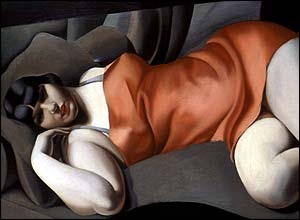
 artist name. Kizette later travel to Italy to look again at Italian art. In 1927, on the balcony Kizette awarded the first prize at the Bordeaux International Exhibition
 divorces in 1929 and meets Tadeusz Baron Raoul Kuffner a collector of his work. Next to him, he travels to the United States. There, despite his bisexual orientation, Tamara agrees to marry the baron. It is famous among the bourgeoisie New York and exhibited in several American and European galleries. In 1933, traveling temporarily to Chicago where he worked with Willem de Kooning and Georgia O'Keeffe in 1938 they moved to Beverly Hills.
Kizette In 1941 he went to live with his mother. In 1960, Tamara changes style, turning to abstraction in 1962, the baron dies.
March 18 1980Tamara de Lempicka died in Cuernavaca (Mexico). Kizette, indulging a dream of his mother, accompanied by the sculptor Victor Contreras (heir to much of the work of the painter), rose a helicopter and went to throw his ashes in the crater of Popocatepetl.
Polish painter born in Warsaw. Her husband's arrest by the Bolsheviks became

a kind of heroine. After rescuing her husband traveled to Paris where he eventually became a muse of painting Art Deco and dazzled the aristocracy with the deliberate sensuality of his art. Married second husband, a millionaire, made her Baroness and flashes in the great halls began to mix with the incipient rise of Nazism. It then traveled to America, where he decided to live as spectacularly as he had planned. He was friends with Greta Garbo, Orson Welles, Tyrone Power and Rita Hayworth, among others. On the death of her husband decided to leave this country, going to live in Cuernavaca (Mexico), where he continued painting and frequenting the high social circles until his death. Tamara de Lempicka died in 1980 and his ashes are scattered over the volcano Popocatepetl
Hard to tell someone about whom there are so few hard facts, beginning with the date and place of birth as it has not been clarified whether it was in Warsaw in 1898 or Moscow in 1900 ... not if it is a matter of lack of documentation or a "fad ideological" like Frida Kahlo, the fact is that it is not possible to determine con exactitud este dato.
 Lo pocos datos concretos sobre su vida, mas allá de su especial obra pictórica profusamente documentada, se limitan a una escueta biografía y a una relación de sus innumerables viajes y a reseñas de una vida social muy activa que yo voy a resumir aun mas limitándome a los sucesos resaltantes de su vida; con certeza, del libro escrito por su hija Kizette, "Pasión por el Diseño", puedan extraerse mas datos, seguramente fidedignos aunque tal vez matizados por la cambiante relación que tuvo con su madre, (en especial en los últimos años de vida de la artista) aunque de cualquier forma será un retrato mas justo y realista que el
 que hizo de ella Franco Maria Ricci in his 1977 book, which I have not read but evidence found here and there seems to be a sensationalist and scandalous exhibition of the life of Lempicka ...
 Tamara de Lempicka, was born into a wealthy family and well placed socially as a child he showed his strong character, independence and a well-defined criteria and their own special skills in painting, having managed to escape a boring education in boarding schools in Europe traveling with his maternal grandmother discovered that his "taste" for the painting is actually a passion that in the course of the 80 - 83 of his life with originality and skill exercise.
 Denied to return home and after a brief spell of study in Lausanne is to live with his grandmother in Petrograd where at 18 she married the lawyer
Tadeusz Lempicki
 and this is a crucial point in his life because a few years then in the midst of the maelstrom of the Russian Revolution and her husband is arrested, after much effort succeeds Tamara release giving him a halo of heroin which she gladly wrap. Following the release travel to Copenhagen and soon after to Paris, where her daughter was born installed and Kizette, in this early period is when Tamara Paris began a formal education in painting, studying under the guidance of Maurice Denis and André Lothe.
 Despite the vicissitudes of life Tamara maintains economic status, reinforced by the sale of his early paintings, it allows a very loose way of life (which would mark his life) and allows you to perform many European travels in the company of high society in contrast to its close association with the bohemian Paris, at that time of great characters who would make history in many areas such as Cocteau and Picasso. With his style
 clearly defined and framed you in Art Deco, in the decade of 20, participated in exhibitions that open the doors of the world, so to speak, making spaces for dissemination itself and his work in magazines like Harper's Bazaar.
 In this decade, major events happen in your life: you move a season in Italy where he also presented his works in exhibitions maintains relations with the playwright Gabrielle D'Notice that although it takes just three short years will leave deep emotional marks, even in these years achieved significant recognition by winning awards notorious in Bordeaux and in Poznan in 1928 as well as concrete Tadeus divorce.
In the following years consolidating its position as an artist to produce his most notable paintings, including self driving a green Bugatti will provide recognition (in addition of numerous commissions), as a portraitist. In 1933 she married Baron Raoul Kuffner, who is also its greatest collector and dealer.
eyeing the hard times that predicted the Nazi threat moves into the U
 nests in 1939 where in addition to hobnob with the elite of society and great film artists at his home in Beverly Hills, made successful exhibitions in New York and San Francisco, his daughter Kizette meets with them at this time and shortly after marries an American geologist.
 The brightness of the career of Tamara de Lempicka fades gradually, try a revival in the early 60 without greater success as the incursion of this icon of Art Deco in abstract painting, in vogue in those years, is a dismal failure with profound emotional consequences, to the point of taking a decision to abandon painting, this must be added the death of her husband in 1962 leaving it definitely
devastated by what the next year moved his residence from New York to Houston where she lives with her daughter and her family. Perhaps nothing or very little is known about these years, except what makes life difficult for his daughter and family, this being a period of silence until 1973, a retrospective of his work in relocating Paris on the table as one of the great artists of the twentieth century in 1974, already ill, he moved to Cuernavaca, where he died in 1980 and where, doing the will of his mother, Kizette spread his ashes on the summit of the volcano Pococatepetl .. .


Subscribe to:
Posts (Atom)